
How to Check Oil Levels Before an Oil Change?
- rankorbit536
- Oct 9, 2025
- 6 min read

Regular maintenance keeps your truck running smoothly, but one of the simplest and most important tasks is checking the oil level. It’s something every driver can do, yet it’s often overlooked until engine problems arise. Low or dirty oil can cause excessive friction, overheating, or even long-term damage. Before you schedule your next oil change, it’s essential to know how to inspect your oil levels correctly.
For drivers looking for reliable truck maintenance, understanding this process can save time, protect your vehicle, and make your next Oil change in Arlington TX more effective. Whether you drive long distances or manage a fleet, a few minutes of preventive attention can keep your engine in top condition.

Why Checking Oil Levels Matters
Oil acts as the lifeblood of your truck’s engine. It lubricates moving parts, reduces wear, and keeps the engine cool. Without proper oil levels, even a well-maintained engine can suffer serious damage. Regularly checking your oil helps you:
Detect leaks or oil consumption early
Prevent costly repairs caused by overheating
Maintain better fuel efficiency
Ensure smooth performance between oil changes
This quick habit not only extends your engine’s life but also ensures that professional maintenance, like the services offered by MTC Truck & Trailer Repair, is done under the best conditions possible.
The Right Time to Check Oil Levels
Many drivers don’t realize that the timing of your check can affect accuracy. For the best reading, your engine should be cool and your truck parked on level ground.
Here’s when to check oil levels:
Before a long trip: To ensure your truck can handle extended drives without issues.
After a long idle period: When your vehicle hasn’t been used for a few days.
Before your next oil change: Especially if you notice changes in performance or oil warning lights.
After a repair or service: For example, after getting Steering repair in Arlington TX, it’s smart to confirm that all systems are balanced, including fluid levels.
Tools You’ll Need to Check Oil Levels
Checking oil levels doesn’t require any expensive tools. A few basic items will get the job done quickly and cleanly.
Checklist of essential tools:
Clean, lint-free cloth or paper towel
Gloves (optional, for cleaner handling)
Flashlight (if checking in low light)
Vehicle owner’s manual for reference
Having these ready before you begin helps you avoid mistakes and ensures you get an accurate reading.
Step-by-Step Guide to Checking Oil Levels
If you’ve never checked your oil before, don’t worry. It’s a straightforward process that takes just a few minutes.
Step 1: Park on a Level Surface
Ensure your truck is parked on flat ground and the engine is turned off. Wait at least five minutes after shutting off the engine to let the oil settle into the pan.
Step 2: Locate the Dipstick
Open the hood and find the oil dipstick. It usually has a bright-colored handle, often yellow or orange, for easy identification. If you’re unsure, your owner’s manual will point it out.
Step 3: Remove and Clean the Dipstick
Pull the dipstick out slowly and wipe it clean using a cloth or paper towel. This removes old oil residue and ensures an accurate reading.
Step 4: Reinsert the Dipstick
Insert the dipstick all the way back into its tube, then pull it out again. This second reading shows the true oil level.
Step 5: Check the Oil Level
Look closely at the markings near the end of the dipstick. Most dipsticks have two lines or dots indicating the minimum and maximum levels. The oil should be between these two marks.
Step 6: Inspect Oil Quality
Beyond the level, pay attention to the oil’s color and texture.
Healthy oil: Light brown or amber and smooth.
Old oil: Dark, dirty, or sludgy, indicating it’s time for an oil change.
Milky appearance: Could mean coolant contamination, a serious issue that needs professional inspection.
Step 7: Add Oil if Needed
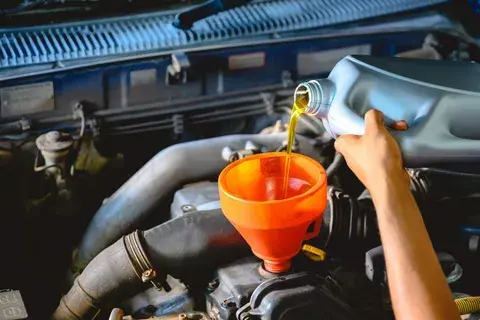
If your oil level is low, add small amounts at a time, checking frequently to avoid overfilling. Always use the oil type recommended by your manufacturer.
Common Mistakes When Checking Oil
Even experienced drivers can make errors during this simple process. Avoiding these mistakes ensures accurate readings every time.
Frequent errors to watch for:
Checking oil right after turning off the engine (gives false high readings)
Parking on an incline
Using a dirty dipstick for measurement
Ignoring oil color or texture
Overfilling the oil reservoir
Developing a routine ensures that each check gives reliable results and helps detect issues early.
Understanding What Your Oil Tells You
Your engine oil is like a health report for your truck. By learning what different oil appearances mean, you can catch potential problems early.
Oil Appearance | What It Indicates | Recommended Action |
Clear amber | Oil is healthy | No action needed |
Dark brown | Oil is aging | Schedule next oil change |
Black and thick | Oil is dirty or degraded | Immediate oil change needed |
Milky or foamy | Possible coolant leak | Seek professional inspection |
Metallic particles | Internal engine wear | Visit a repair shop immediately |
If you notice any irregularities, schedule an inspection at a trusted local shop like MTC Truck & Trailer Repair to ensure there are no underlying mechanical issues.
The Connection Between Oil Levels and Engine Performance
Your truck’s oil level directly affects engine performance. When oil levels drop too low, friction increases between metal parts, leading to overheating or wear. Conversely, too much oil can cause foaming, reducing lubrication and efficiency.
Signs your oil levels might be off:
Increased engine noise or knocking
Oil warning light on the dashboard
Excessive exhaust smoke
Reduced acceleration or sluggish performance
Staying alert to these signs prevents damage and keeps your truck reliable for daily use.
How Often Should You Check Oil Levels
The frequency depends on your truck’s age, model, and driving conditions. As a general rule:
Check oil at least once every month.
Check before and after long-distance trips.
Inspect more often if your vehicle is used for towing or heavy loads.
Older engines tend to consume oil faster, so frequent checks are even more critical. For professional assessment or maintenance, scheduling regular service with a trusted provider is always a good practice.
Signs It’s Time for a Professional Oil Change
Sometimes, checking oil levels isn’t enough. If you notice these signs, it’s time to schedule an expert inspection or oil change:
Persistent low oil readings despite top-ups
Dark or gritty oil even after recent changes
Oil smell inside the cabin
Visible leaks under the truck
Scheduling your Oil change in Arlington TX ensures that fresh, clean oil circulates through your engine, keeping it cool and protected under heavy workloads.
The Role of Professional Maintenance
Even if you check oil levels regularly, professional services go beyond basic inspection. They include full fluid checks, filter replacements, and system diagnostics. A full-service shop can also inspect related systems that influence engine health, such as your steering and transmission components.
For instance, if your truck needs Steering repair in Arlington TX, it’s wise to combine that service with an oil inspection to maintain complete vehicle balance. This saves time and ensures all critical systems are working together efficiently.
FAQs
How often should I check my truck’s oil?
Once a month is ideal, or more frequently if you drive long distances or carry heavy loads.
Can I check oil when the engine is hot?
It’s better to wait a few minutes after turning off the engine to let the oil settle for a more accurate reading.
What happens if I overfill the oil?
Overfilling can cause foaming and reduced lubrication, leading to potential engine damage.
Is dark oil always a bad sign?
Not always. Oil naturally darkens as it collects engine byproducts, but if it’s thick or sludgy, it’s time for a change.
Can I drive with low oil levels?
Driving with low oil levels can cause severe engine damage. Add oil immediately or visit a repair shop.
Conclusion
Checking oil levels before an oil change might seem minor, but it’s one of the simplest ways to ensure long-term engine performance and safety. Taking just a few minutes to inspect your oil regularly helps avoid unnecessary repairs and gives you confidence on the road.
If you’re preparing for an Oil change in Arlington TX or simply need reliable truck maintenance, consider partnering with MTC Truck & Trailer Repair. Their experienced team handles everything from preventive checks to advanced diagnostics with precision and care.


Comments